
A digital asset for the AI era
Why an online directory is one of the best ways to build income in the AI era
AI can generate more information than anyone can absorb. That is precisely why trusted, well-organised places that help people choose may become more valuable.
Artificial intelligence has made it easier to create almost everything online. Articles, images, websites and marketing material can now be produced in a fraction of the time they once required.
But easier creation has not made choosing easier.
Consumers are surrounded by more information, more recommendations and more businesses competing for attention. What they increasingly need is not another generic answer. They need a reliable place to find relevant options, understand the differences and decide who to trust.
As information becomes easier to generate, trusted organisation becomes more valuable.
This is why we believe a well-built niche directory remains one of the most interesting online business models in the AI era.
A directory does something AI alone cannot
AI tools can answer questions quickly, but they do not remove the need for accurate business information, genuine human experiences or a clear view of the choices available in a particular market.
Someone looking for a wedding photographer, local tradesperson, health practitioner or specialist supplier usually wants more than a broad generated response. They want to compare services, locations, images, reviews, availability and contact details. They want enough context to feel confident about taking the next step.
A focused directory brings that decision-making information together. It does not need to compete with the entire internet. It needs to become unusually useful within one location, profession, interest or community.
The value sits between two audiences
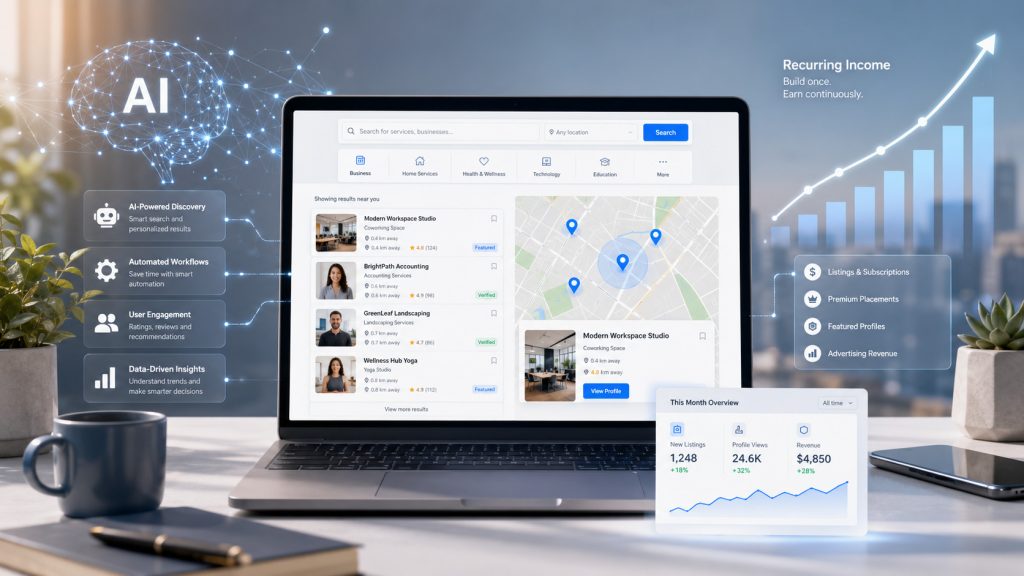
A directory solves two related problems. Visitors need help finding suitable providers. Businesses need visibility, leads and customers.
The directory sits between them and creates a useful exchange. Visitors receive a clearer way to research a market, while listed businesses gain another opportunity to be found by people who are already interested.
The commercial strength of the model grows when the platform becomes more useful to both sides. This is not simply a website full of names. It is a piece of market infrastructure.
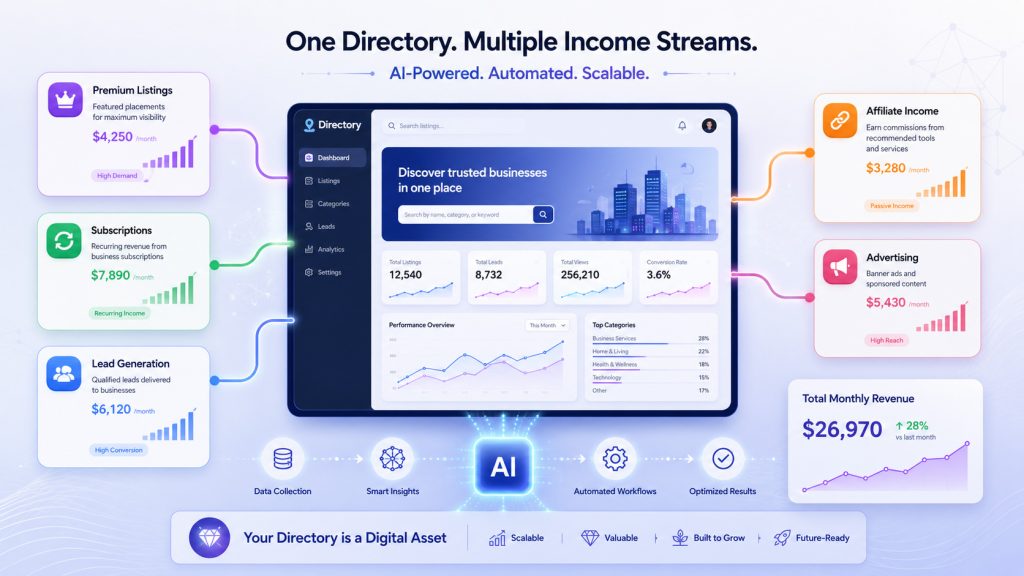
One platform can support several kinds of income
A directory does not have to depend on a single revenue source. The right mix will depend on the niche and audience, but several options can grow around the same underlying asset.
Premium listings
Businesses pay monthly or annually for enhanced visibility, richer profiles or priority positions.
Sponsorships
Relevant businesses sponsor categories, guides, newsletters or selected placements.
Leads and affiliates
The directory earns from qualified enquiries, bookings or carefully selected recommendations.
Products and services
Guides, reports, events, data, newsletters or specialist services extend the value of the platform.
For example, 100 businesses paying $49 a month would represent $4,900 in monthly recurring revenue. That is an illustration, not a prediction. Results depend on the niche, traffic, pricing, sales process and value delivered.
The larger point is that a directory can build revenue progressively. It does not necessarily start from zero every month.
AI can reduce the work without becoming the product
Historically, directories could be painfully manual. Business information had to be researched, entered, categorised, checked and updated one listing at a time.
AI and automation can now support research, categorisation, descriptions, outreach, reminders, content planning and reporting. Used properly, technology removes repetitive administration and creates more room for the owner to improve the offer and build relationships.
AI should help maintain a useful directory. It should not fill the site with generic, unchecked content that makes the platform less trustworthy.
Ownership matters more as platforms keep changing
A social media audience exists on somebody else’s platform. Algorithms can change, accounts can be restricted and reach can disappear quickly.
A directory website is an owned digital asset. The owner controls the domain, database, brand, customer relationships, pricing, content and revenue model.
Over time, the asset can accumulate search visibility, direct traffic, subscribers, business listings, industry data, brand recognition and recurring relationships. That makes it more than a channel. It becomes something with its own operating and potentially saleable value.
A smaller, relevant audience can be commercially powerful
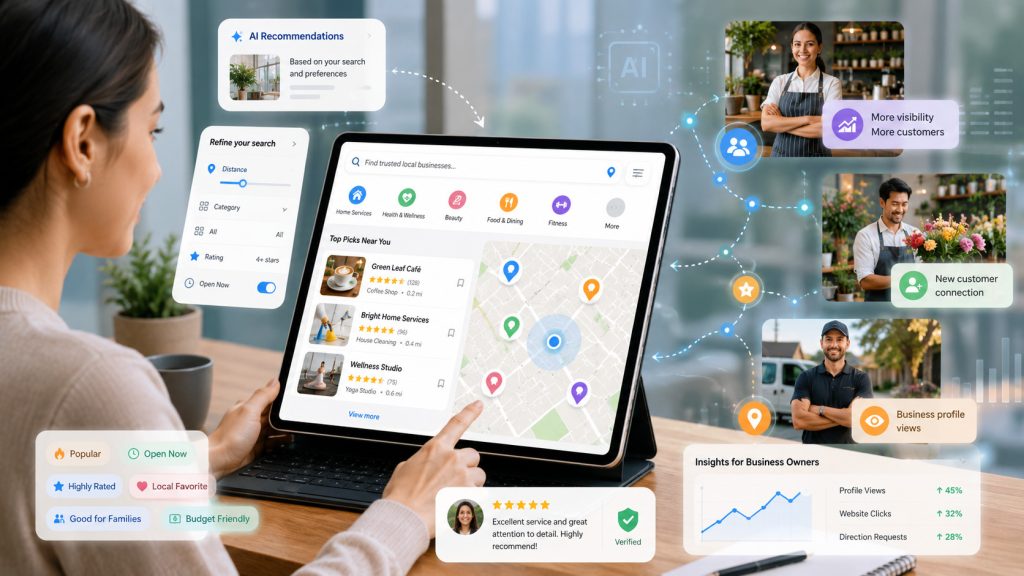
A niche directory does not necessarily need millions of visitors. It needs the right visitors.
A platform used by 2,000 people actively planning weddings may be more valuable to relevant businesses than a general website attracting 20,000 visitors with no clear intention. Relevance matters more than vanity metrics.
The same is true of listings. A smaller directory with accurate information, active relationships and paying members may be far more useful than an enormous database of outdated businesses.
The owner does not have to become the product
Many online businesses are built around the founder’s personal brand. That can work, but it also creates pressure to stay visible and personally involved every day.
A directory can build authority around the platform itself. The owner may choose to be visible, but the value can reside in the network, information, systems, audience and relationships rather than one personality.
For people who want to build an asset instead of another job for themselves, that difference is significant.
A good directory still needs a growth system
The common mistake is assuming that launching the website is the same as launching the business.
Even an attractive directory in a promising niche can remain empty if it lacks quality listings, a clear offer for businesses, consistent outreach, useful content and a pathway from free participation to paid value.
The work can now be systemised far more effectively, but it cannot be wished away. Directory owners still need to decide who the platform serves, why businesses should participate and how the resource will stay useful over time.
If you already have a directory or are seriously considering one, Fuellyt helps put those listing, outreach and monetisation systems behind the site.
Local search can become part of the asset
For a location-based directory, every well-maintained category and listing can help the platform answer a specific local question. A visitor may be looking for a wedding photographer in one region, a pet-friendly place to stay or a specialist service close to home. When the structure is clear and the information is genuinely useful, those pages can create many relevant entry points into the directory.
This is not about creating thousands of thin pages with copied business information. Local search value comes from accurate details, sensible categories, helpful comparisons, original local content and signals that the directory is actively maintained.
Automation needs a purpose
We use automation to reduce the repetitive work behind researching listings, organising data, requesting confirmations, following up with business owners and keeping records current. It can also support content planning, reporting and reminders when information needs to be reviewed.
The benefit is not simply speed. A good system gives the owner more time to improve the directory, speak with businesses, develop partnerships and understand what users actually need. Automation should strengthen those relationships, not replace them with generic messages or unchecked information.
A directory can become part of the market infrastructure
The strongest directories do more than attract search traffic. They become a familiar place where people compare options and where businesses want to be represented accurately. That position can support advertising, sponsorships, affiliate relationships, lead generation, premium listings, research and specialist services around the same audience.
There is still room to build useful directories before many markets become crowded with well-run platforms. The advantage will not come from launching the most listings. It will come from choosing a market carefully, building relationships early and becoming the resource people remember.
The opportunity is not to build a list
The strongest directory opportunities often sit in markets that are fragmented, difficult to navigate or poorly served by existing platforms.
Technology can make the site easier to build. It cannot create the judgement required to choose the niche, design the model or earn trust from both sides of the market.
The opportunity is not simply to publish a list of businesses. It is to build the place people return to when they are ready to choose.
Already have a directory, or thinking seriously about building one?
Fuellyt helps directory owners build the systems behind a stronger listing foundation, outreach and monetisation pathway.
Leave a Reply